Re-imagining the role of business in society
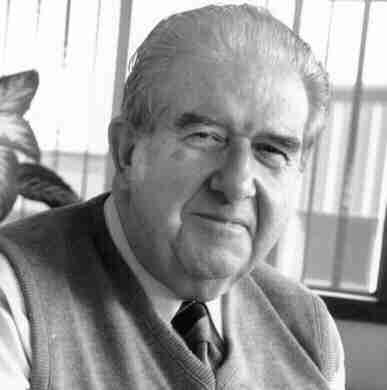
Willis Harman (1918-1997) founder of the World Business Academy (1987)—re-imagined the role of business from being solely focused on profit-making to include taking responsibility for the whole. Here is an excerpt:
Business has become, in this last half century, the most powerful institution on the planet. The dominant institution in any society needs to take responsibility for the whole — as the church did in the days of the Holy Roman Empire. But business has not had such a tradition. This is a new role, not yet well understood or accepted.
Built into the concept of capitalism and free enterprise from the beginning was the assumption that the actions of many units of individual enterprise, responding to market forces and guided by the ‘invisible hand’ of Adam Smith, would somehow add up to desirable outcomes.
But in the last decade of the twentieth century, It has become clear that the ‘invisible hand’ is faltering. It depended upon a consensus of overarching meanings and values that is no longer present. So business has to adopt a tradition it has never had throughout the entire history of capitalism: to share responsibility for the whole. Every decision that is made, every action that is taken, must be viewed in the light of that kind of responsibility.
Harman’s thinking about the role of business is more important than ever and thought-leaders claim our current economic crisis will give birth to a new economic system. I hope so. We need to create an economy that works for us and not the other way around.
Rinaldo Brutoco, the current president of the WBA sees business as the solution to the problems it helped create. “The competencies of business, properly motivated and directed, can solve every problem in the world better than any other institution. The key is for business people to add values, not just material value. “What would it look like if you brought your compassion as well as your intellect to work? What would you do if you cared about how everyone in society fares?”
Good questions. I personally see a shift in the importance leaders ascribe to creativity and innovation. What if business created a bureaucracy designed to foster creative talent and intelligence, instead of burying it? What if we applied principles of creativity and innovation to management itself? What if managers shifted their focus from command and control, to one of developing talent? What would happen if leaders, managers and knowledge workers learned to conduct coaching conversations to cultivate and sustain thriving ecosystems? What will the future of commerce look like?
Willis Harman was also philosopher, scientist, visionary, futurist, president of the Institute of Noetic Sciences and professor emeritus at Stanford University.
His book, Higher Creativity: Liberating the Unconscious for Breakthrough Insights #amazon co-authored with Howard Rheingold, captures a history of genius-level creativity and invention. It is one of my favourites and definitely worth reading.